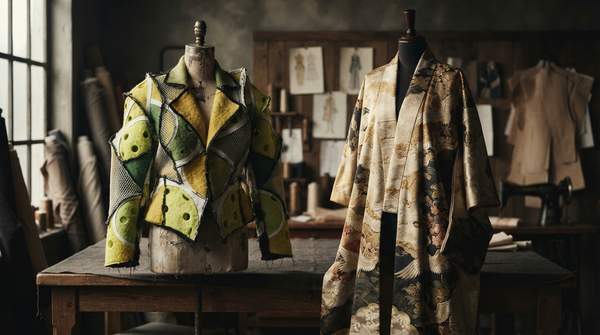
Upcycling textile and material waste into runway fashion follows a structured workflow—sourcing, preparation, transformation, and design—but the practical execution of each stage changes completely depending on the material. A designer melting recycled pickleballs into sculptural flowers is solving a fundamentally different problem from one reworking Showa-era tenugui into a contemporary garment. The first path transforms the material beyond recognition; the second preserves its history while giving it new life. Understanding that fork in the road, and the techniques attached to each branch, is the core skill of upcycling for high fashion.
The Upcycling Imperative in High Fashion
Upcycling has moved from the margins of craft into the runway for reasons that are both environmental and aesthetic. As Textile School's overview of the practice frames it, upcycling diverts waste from disposal, reduces the need for virgin resources, lowers water and chemical use, and encourages craftsmanship and slow design. It also fosters what the publication calls emotional durability: consumers value pieces with a story, history, or visible handwork.
The runway is where that story becomes visible. Austin Creative Reuse, a nonprofit that sells donated materials and craft supplies, launched its Reuse on the Runway show partly out of concern about fashion industry waste. "It felt like an opportunity to showcase sustainable style and inspire audiences to see different ways that fashion can be made reuse-centric," the organization's artist program coordinator, Jillian Srygley, told KUT. The show's shop in Austin's Windsor Park neighborhood stocks, in the station's description, just about every random material a designer could imagine—a Goodwill for crafty people, and a hunting ground for unconventional upcycling.
General Workflow for Upcycled Runway Art
Whatever the material, the process shares a skeleton. Textile School breaks the workflow into creative and technical stages, beginning with material sourcing. The sourcing menu is broad: studio-generated offcuts, deadstock fabrics from mills, thrifted garments, damaged or sample inventory, and industrial textile waste such as denim shreds and military uniforms. Each stream carries different constraints—quantity, condition, and consistency—that shape everything downstream.
After sourcing comes preparation, then design ideation, then construction. The critical insight for any designer is that the general workflow is only a framework: specific material properties dictate the practical application of each stage. A bolt of vintage kimono fabric and a bucket of used pickleballs both pass through "sourcing" and "transformation," but they demand different tools, different safety considerations, and different design philosophies. The two case studies below show how far those paths diverge.