For a luxury fashion brand, the packaging is part of the product. The two most compelling emerging alternatives to plastic—mycelium grown from mushroom roots and films and boxes derived from seaweed—offer genuinely different value propositions. Mycelium delivers robust, insulating protection with an organic, opaque surface; seaweed offers radical end-of-life credentials, including packaging that dissolves in water within hours. I believe the right choice comes down to which of those stories your brand can tell with conviction.
The Imperative for Sustainable Luxury Packaging
Luxury brands are under real pressure to reconcile premium design with environmental responsibility, and the market rewards those that manage it. Burberry set a goal to eliminate all plastic from its customer packaging by 2025 and has since accomplished it, according to packaging producer Smurfit Westrock. Gucci, as Salman Shahid notes for Seaside Sustainability, moved in 2020 to FSC-certified paper printed with non-toxic inks without sacrificing elegance.
The commercial case is measurable. In Shorr Packaging's 2025 consumer report, written by Riccarda Rester, 58% of survey respondents said they prefer brands with publicly committed sustainability goals, and 39% have switched to a competitor that offers sustainable packaging over one that does not. Compostable, recyclable or reusable options appealed to 54% of consumers. Packaging is no longer a protective afterthought; it is a loyalty lever.
Mycelium Packaging: Nature's Protective Embrace
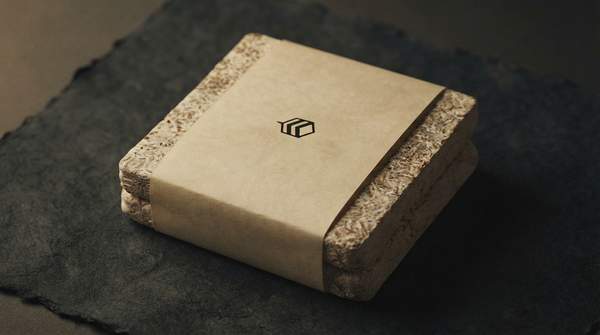
Mycelium packaging is grown, not manufactured: mushroom roots bind agricultural waste into molded forms. The World Economic Forum describes the result as a safe, strong and biodegradable material that, unlike plastics taking hundreds of years to decompose, naturally degrades after its intended product cycle. CarbonBright reports that commercial producers such as Mushroom Packaging offer material that is home compostable in 45 days.
Functionally, the material earns its place in luxury logistics. GROWN bio, a producer of mycelium packaging, states that its material is protective and insulating, warding off external impacts while remaining pleasantly soft—avoiding damage to sensitive product surfaces—and shielding shipment contents from extreme heat and cold. For a silk scarf, a glass perfume bottle or a lacquered accessory, that combination of cushioning and climate insulation is exactly what foam and bubble wrap once provided.
Aesthetically, mycelium has a distinctive signature. Jose Pablo Dominguez, writing for WeLoveDaily, describes it as opaque and naturally colored, ranging from cream to tan to warm brown, with an organic, slightly irregular surface texture in which the history of the material's growth remains visible. That irregularity can read as artisanal authenticity—or as inconsistency. The hard limit is transparency: no commercially available mycelium variant is transparent or translucent, so it cannot showcase a product through the packaging itself.
Seaweed Packaging: Dissolving Waste, Enhancing Experience
Seaweed-based packaging is made from algae and other sea plants that grow rapidly and require no fresh water or arable land, as CarbonBright explains. EcoEnclose, which publishes a detailed evaluation framework for the material, notes that water can be recycled through processing systems to minimize freshwater use and that solvents, used in some extraction methods, are not required—though it cautions that finding the most efficient, environmentally friendly processing methods will be critical to sustainable scaling.
Seaweed's most striking property is its end-of-life performance. CarbonBright highlights formats such as sachets for liquids and solid foods and boxes that dissolve in water. Lombard Odier, reporting on luxury packaging innovation, describes a brand using seaweed-based boxes that dissolve in water within hours and can then be used as plant fertiliser. For a customer unboxing ritual, that is a genuinely novel gesture: packaging that does not merely get discarded but returns to the earth.
The trade-off is durability. A material engineered to dissolve in water within hours is, by design, unsuited to long-term moisture exposure. Its protective qualities are specific to intended uses such as single-use sachets and dissolvable containers rather than multi-year rigid protection for a couture garment.
Mycelium vs. Seaweed: A Luxury Packaging Comparison
Setting the two materials against the criteria that matter most to a luxury house—environmental benefit, aesthetics, protection and end-of-life—clarifies the choice. Mycelium wins on robust protection and a tactile, natural presence; seaweed wins on radical biodegradability and functional novelty. Neither is a universal replacement for the other.
| Criterion | Mycelium-based packaging | Seaweed-based packaging |
|---|---|---|
| Environmental benefit | Grown from agricultural waste; strong, biodegradable, supports circular design | Algae grows rapidly with no fresh water or arable land; processing can recycle water and avoid solvents |
| Aesthetic potential | Opaque, cream-to-warm-brown natural color; organic, slightly irregular surface texture | Novel forms such as sachets and dissolvable boxes; appeal tied to functional innovation |
| Protective qualities | Impact-resistant, insulating against heat and cold, soft against sensitive surfaces | Contains liquids and solids for intended uses; rapid dissolution limits moisture resistance |
| End-of-life | Home compostable in 45 days; degrades naturally after use | Dissolves in water within hours; can be used as plant fertiliser |
Read as a decision matrix, the comparison shows mycelium as the workhorse for shipping and rigid protection—wine-bottle shippers, void fill, cosmetic containers—while seaweed suits formats where the unboxing moment and total waste elimination matter more than longevity. The evidence points to a portfolio approach rather than a single winner.
Aligning Sustainable Packaging with Luxury Brand Identity
The material itself can become brand narrative. Lombard Odier's reporting on one luxury brand's redesign shows how this works in practice: the company adopted pouches made from wine residue, home-compostable protective foam made with renewable mycelium, and seaweed-based boxes that dissolve in water. Co-founder Nicolas Freudiger framed the ambition plainly: "We want our packaging to disappear."
That philosophy—packaging designed to return to the environment rather than persist in it—fits a circular-economy framing that Lombard Odier argues supports rather than detracts from prosperity. Shahid makes the complementary point for Seaside: compostable materials can transform packaging into a storytelling tool, and brands need not sacrifice luxury features like texture, durability and protection to go sustainable. The material's visible properties, whether mycelium's organic surface or seaweed's dissolving box, give customers something to remember and retell.
Choosing Your Sustainable Luxury Packaging
Luxury brands should select mycelium-based packaging for robust, insulating protection with a natural, opaque aesthetic, or seaweed-based packaging for rapid biodegradability and innovative dissolvable or edible applications, aligning the choice with their specific brand identity and environmental commitments. In practice: mycelium for the protective layer that carries a garment or flacon to the customer's door; seaweed for inner sachets, samples or gift formats where dissolution is the story.
Two caveats bound this guidance. Pricing is highly variable and depends on scale and formulation, so no cost comparison is offered here. And these are two leading examples among emerging innovations, not an exhaustive menu—recycled ocean plastics and dissolvable polymers remain separate conversations.
Whatever you choose, measure it. The indicators that will tell you whether the investment is working are customer feedback on packaging experience or brand sustainability ratings. If unboxing commentary turns toward the packaging itself, and your sustainability ratings climb, the material has done more than protect the product—it has become part of the brand.
Sources
- Ways to make your luxury packaging more sustainable — Smurfitwestrock
- 5 Popular Sustainable Packaging Solutions for Luxury Brands — Seaside
- The 2025 Sustainable Packaging Consumer Report — Shorr Packaging
- 5 sustainable alternatives with use of Mushrooms Mycelium — World Economic Forum
- 5 Packaging Innovations Shaping the Future of Sustainability — Carbonbright
- Mushroom® Packaging - Innovation from Nature — GROWN bio
- Biodegradable Packaging: Seaweed to Mycelium — WeLoveDaily
- Seaweed Packaging: Benefits, Challenges, and Use — Ecoenclose
- How luxury brands make sustainable packaging — Lombardodier