The short answer to how fashion prototyping has changed: development time for a sample has compressed from two to four weeks of physical iteration to as little as eight hours to two days of virtual work, and physical sampling rounds—the single largest source of prototyping waste—can be cut by up to 80% in the case studies cited by fashion innovation consultant Lui Iarocheski. I believe the evidence supports a clear division of labor for modern workflows: digital twins for iteration and decision-making, physical samples for final tactile validation. Here is how the industry got there, and what each stage of the evolution still does best.
The Evolution of Fashion Prototyping: From Toiles to Digital Twins
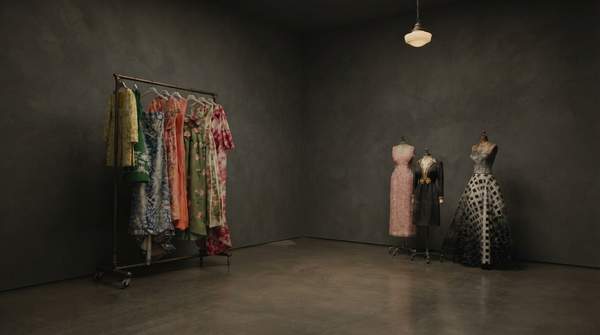
For generations, a garment began life on a dress form. Designers draped fabric directly on a mannequin, cut and stitched a cheap cotton toile to test the silhouette, and then shipped that sample between studio and factory for review. Every revision meant another physical object: more muslin, more couriers, more waiting. An overview published by the American Association of Textile Chemists and Colorists notes that the traditional design-and-development model has long been criticized for high costs and lengthy timelines, with each garment undergoing roughly seven iterations on average and 30% of fabrics wasted along the way—fabric that ultimately ends up in landfill.
The evolution toward digital passed through two distinct stages rather than one leap. First, computer-aided design moved flat patterns onto the screen, digitizing the 2D geometry of garment components. Second, 3D modeling technology added a simulated body and simulated cloth physics, allowing those flat patterns to be assembled, draped, and evaluated virtually. The result is the digital twin: a continuously updated model that mirrors the characteristics and behavior of its intended physical counterpart.
Traditional Physical Sampling: Hand-Draping and Toiles
The physical method's strength is fidelity. A toile gives the designer direct, unmediated contact with the material—how it falls, where it pulls, how it feels against the hand. Fanterco, a sourcing advisory that has compared the two approaches for brand workflows, notes that the physical sample remains the ultimate test for hand-feel, the tactile sensation of a fabric that no simulation yet reproduces.
That fidelity is bought at a steep operational price. Fanterco's reported industry figures put traditional sample development at two to four weeks per round, including air freight, with high per-sample costs in materials, labor, and shipping. Waste generation is rated high: rejected samples are themselves discarded material, and Fanterco cites roughly 15% fabric scrap even within the cutting process. Because reviews depend on physical objects, feedback loops require shipping and in-person inspection, which slows every decision. Waste here is not an accident of poor practice; it is inherent to resolving design questions through repeated physical construction.
The Rise of 2D CAD Patterning
2D computer-aided design was the crucial intermediate step, even though it never produced a prototype you could touch. By moving pattern pieces into CAD software, studios gained an exact, editable digital representation of each garment component—the flat geometry from which any 3D garment model must later be assembled.
Its more durable contribution came in manufacturing preparation. Because a factory working from digital patterns knows exactly how much fabric is required down to the square centimeter, it can optimize "nesting"—the way patterns are laid out on a fabric roll—to minimize waste. Fanterco frames this not as eco-friendly marketing but as industrial efficiency powered by data. CAD patterning therefore delivered precision and material planning before it delivered visualization; the three-dimensional, body-fitted simulation had to wait for 3D modeling to be layered on top of that 2D foundation.
3D Virtual Prototyping and Digital Twins: A New Frontier
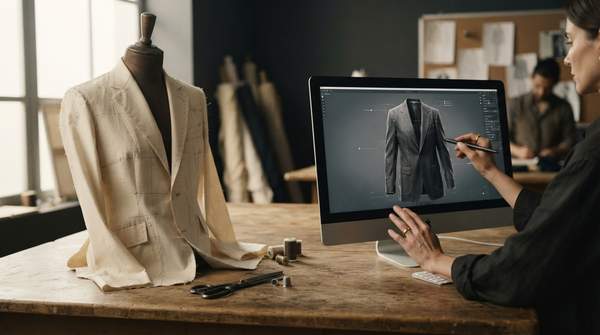
A digital twin begins where a traditional prototype ends up: with a garment that exists as data rather than cloth. An academic review in the field describes how, using CAD software and 3D modeling technology, designers create a digital twin of a physical clothing product, visualizing their ideas in a virtual environment and intuitively understanding fit and drape on a simulated body before any physical sample is cut.
The measurable gains are dramatic. The academic comparison reports that the traditional sampling model takes about two weeks, while a 3D virtual sample takes roughly eight hours, compressing iteration time from design development to sample production and eliminating the material cost of repeated physical sampling. Iarocheski, writing for AATCC, cites case studies in which digital twins reduced the samples required during development by 80%, and reports that brands using virtual testing have accelerated design-to-manufacturing turnaround to 24–48 hours against a traditional 30-day timeline. He also points to Adidas, which used digital twins to simulate production and cost-optimize a sneaker design. The economics are structural rather than marginal: an initial software investment is offset over time by fewer physical samples, less air freight, and lower logistics carbon.
How Digital Twins Are Created and Used in Design
The workflow behind those numbers runs in four connected steps:
- Build the 2D pattern base. Garment components are created or imported as flat CAD pattern pieces—the same digital geometry a factory would cut from.
- Apply real-world fabric behavior. Each piece is assigned material properties so the simulation reflects how the actual textile will behave.
- Simulate drape and fit on an avatar. The 2D pieces are assembled around a virtual body, letting the designer see how the garment falls, pulls, and fits before a single meter of fabric is used.
- Iterate and collaborate in real time. Because the twin mirrors its physical counterpart's characteristics and behavior, it supports prediction and decision-making—and, as the academic review notes, it can be used for subsequent adjustments, facilitating clear communication and seamless collaboration between designers, manufacturers, and other stakeholders.
Writing at The Interline, industry analyst Mark Harrop describes the practical payoff: design challenges can be resolved in the virtual world before the prototype stage, avoiding the time and cost of multiple iterative sampling rounds, and designers can digitally test different sustainable materials, processing methods, patterns, and styling details so that only the strongest options proceed to physical production.
Comparative Analysis of Fashion Prototyping Methods
Set side by side, the three methods show where each stage of the evolution earns its place. Time figures reflect reported industry averages and case studies, and cost differences are structural—per-sample spending versus upfront setup—rather than fixed dollar amounts.
| Metric | Traditional Physical Sampling (toile/hand-draping) | 2D CAD Patterning | 3D Virtual Prototyping (digital twin) |
|---|---|---|---|
| Development time | 2–4 weeks per sample round, with multiple iterations (reported averages) | Digitizes pattern geometry but produces no testable prototype on its own | 8 hours to 1–2 days per virtual sample |
| Material waste | High: rejected samples plus roughly 15% fabric scrap | Enables precise nesting and near-exact fabric calculations for cutting | Design refinement happens without physical material until final approval |
| Cost structure | High per-sample cost at every iteration—materials, labor, shipping | Software-based; value is in pattern precision and planning | Upfront setup cost, then lower marginal cost per iteration |
| Collaboration | Physical samples require shipping and in-person review, slowing feedback | Shareable flat files, but no shared visual of the finished garment | Instant digital transfer; real-time iteration with remote teams and manufacturers |
| Key limitation | Time, cost, and waste are inherent to physical iteration | Cannot show drape, fit, or the assembled garment in three dimensions | Visual simulation only—cannot verify hand-feel or true tactile behavior |
The pattern across the table is consistent: each technology removed a constraint of the previous one, while the last remaining constraint of physical contact—hand-feel—stays stubbornly physical. That is why the table reads as an evolution rather than a replacement.
Choosing the Right Prototyping Method for Your Workflow
Fashion design workflows should strategically integrate 3D virtual prototyping, leveraging its efficiencies for early-stage iteration and reserving physical samples for final validation, to optimize development time, reduce waste, and enhance collaboration. The evidence supports this hybrid: virtual work collapses iteration time and eliminates most sampling rounds, while the physical sample retains one irreplaceable job—tactile confirmation—before production. Cost comparisons remain structural, and no specific software belongs in this decision until a team's own volume and iteration habits are known.
The measurable indicators to watch are the reduced number of physical samples required per collection, faster design approval cycles, and decreased material waste in the prototyping phase. Iarocheski's cited case studies set the benchmark worth testing against: an 80% reduction in development samples. Any studio adopting the digital-first sequence can count its own sample rounds before and after, and expect the design-to-approval cycle to move from weeks toward the 24–48-hour turnarounds reported by brands already working this way.