For a luxury fashion executive, the smart textile question is not whether the technology exists, but which of its distinct families can survive contact with a couture standard of quality. The honest answer, based on the current state of the field: interactive and aesthetic textiles have the clearest runway into high-end product, functional comfort textiles remain compelling but immature, and every category is gated by the same hard test—washing. I believe the winning strategy is to lead with the category that flatters a garment rather than burdens it, while holding functional and energy-oriented concepts until durability and manufacturing maturity catch up.
The Rise of Smart Textiles in Luxury Fashion
Smart textiles—sometimes called e-textiles—are materials that integrate electronic components and technology into fabrics, combining the conventional characteristics of cloth with the capabilities of modern electronics, as a 2025 systematic review of smart textile design and materials for luxury fashion defines them. The same review notes that this integration delivers health monitoring, temperature regulation, and interactive capabilities, and describes it as revolutionizing an industry already defined by constant change.
The commercial signal is real. A market analysis from Dataintelo reports that fashion and entertainment applications achieved a 12.8% market share, driven specifically by luxury brand integration and experiential technology, with high fashion designers incorporating smart textiles into runway collections and creating aspirational demand among affluent consumers who value technology-integrated luxury goods. Grand View Research, in its smart fabrics market analysis, takes the longer view: textiles are moving beyond traditional functionality toward integrated performance and connectivity, and as the market matures, commercial success will depend not only on innovation but also on durability, comfort, and large-scale manufacturability.
That last sentence is the strategic crux. The luxury segment has the margins, the storytelling apparatus, and the customer appetite for novelty—but it also has the least tolerance for a garment that fails on its second wash. The three categories below should therefore be evaluated not just by what they can do on a runway, but by whether they can be manufactured at scale and worn repeatedly without degrading.
Aesthetic and Interactive Smart Textiles
This is the category with the most natural affinity for luxury. A smart textile, in the definition used by Verified Market Research, is a material or structure that detects and responds to stimulation—mechanical, thermal, chemical, electrical, or magnetic. When that responsiveness is directed at appearance and interaction, the result is a dress that shifts hues depending on mood or environment, as the industry publication Fibre2Fashion describes, or fabrics that glow in brilliant colors and garments that respond to gestures. The publication frames these innovations as opening new avenues for self-expression, making fashion more interactive and personalized.
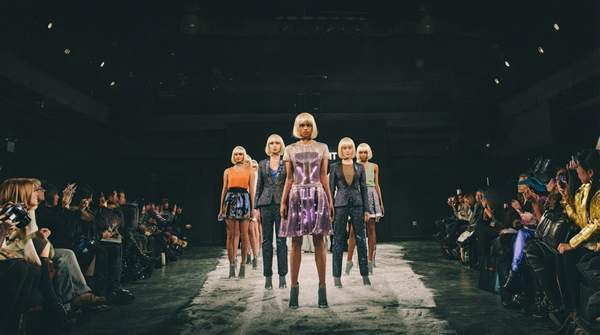
The creative ceiling is high. Designers and scientists are blending sensors directly with fabric—Deutsche Welle's reporting on the field describes a music-making T-shirt built by Syrian designer Akhil Amer and artists using textured interfaces to create calming experiences. A review of luxury fashion innovation notes that augmented reality, artificial intelligence, and digital printing are being combined to advance smart clothing in luxury settings, extending the category from personalized garments toward augmented-reality experiences in haute couture. Dataintelo likewise highlights interactive clothing with light-emitting fibers, color-changing textiles, and haptic feedback creating novel experiences at festivals, concerts, and live events—exactly the experiential marketing language luxury houses already speak.
The caution is equally clear. A review of smart textile development in luxury fashion records that light-based effects produced a blinking effect in the eyes of wearers, and that wearable applications caused skin problems and ill health in some cases—drawbacks the field is still working to overcome. An aesthetic technology that irritates the wearer or strains the eye is a brand risk, not a brand asset. For luxury, this category works best when the electronics are invisible in repose and expressive on command.
Performance and Comfort Enhancing Smart Textiles
The second family trades spectacle for service: textiles that monitor, respond to, or adapt to conditions, as Grand View Research characterizes the market's direction. The systematic review lists health monitoring and temperature regulation among the core features of smart textiles, and Fibre2Fashion offers a concrete early example in Ralph Lauren's PoloTech shirt, which provided biometric tracking while maintaining a sleek fashion aesthetic.
What this category lacks, at present, is a deep library of luxury-specific applications or a mature core technology that disappears into fine fabric. Researchers are working on conductive fabrics that can be washed, Deutsche Welle reports—an admission that washable conductivity is still a research target rather than a solved problem. A comprehensive study on washing conditions for smart fabrics, published in the PMC research archive, states plainly that most smart textile products in the integrated phase remain in research and development, and consequently lack in functional performance, ease of use, production capacity, price, comfort, and maintenance.
For a luxury executive, the implication is patience with a defined trigger. Comfort-oriented functionality is strategically attractive because it is invisible—thermoregulation or biometric sensing need not alter a silhouette—but committing to it before reliability is proven risks the one thing a luxury brand cannot spend: customer trust. The PoloTech example shows the aesthetic problem is solvable; the reliability problem, discussed below, is the remaining gate.
Energy-Harvesting Smart Textiles
The third category—textiles designed to generate or conserve power—sits furthest from commercial readiness in the luxury context. Fibre2Fashion notes only that some smart textiles are being designed with sustainability in mind, reducing energy consumption in alignment with eco-conscious consumer trends. That is an ambition statement rather than a product portfolio: the category's core technologies and luxury applications have not yet been demonstrated at the level of specificity that the aesthetic category enjoys.
There is a strategic logic to watching it closely nonetheless. Sustainability is increasingly part of the luxury value proposition, and a garment that powers its own functions would answer the practical weakness—power supplies—that keeps most e-textiles tethered to charging cycles. The review of luxury smart textiles anticipates that smart textiles will become more generic over time and spread into automotive and aerospace applications, suggesting the underlying capabilities are on a maturation curve rather than a dead end.
My guidance: treat energy-harvesting as a research-partnership play, not a collection play. Position the brand to move when the technology demonstrably holds up under laundering and daily wear, and let the aesthetic category carry the smart-textile narrative in the meantime.
Smart Textile Technology Comparison for Luxury Brands
The table below categorizes smart textile technologies by primary function and evaluates each against the decision criteria that matter for luxury integration: core function, application potential, and documented implementation challenges. It is built on market reporting, a systematic review of luxury smart textile design, and the washability research literature, and it reflects the current maturity of each category rather than its theoretical ceiling.
| Technology Category | Core Function | Luxury Application Examples | Key Implementation Challenges |
|---|---|---|---|
| Aesthetic/Interactive Textiles | Materials that detect and respond to stimuli—mechanical, thermal, chemical, electrical or magnetic—to change appearance or enable user interaction, including color-shifting, glowing, gesture recognition, and touch sensitivity. | Dresses that shift hues with mood or environment; garments that glow; pieces responding to gestures; runway collections with light-emitting fibers and haptic feedback; augmented-reality experiences in haute couture. | Preserving comfort, hand feel and traditional fabric properties while embedding electronics; documented wearer issues including skin irritation and a blinking effect from light; durability and washability. |
| Performance/Comfort Textiles | Adaptive functionality—health monitoring, biometric tracking and temperature regulation—delivered through sensors and conductive elements integrated into fabric. | Biometric-tracking shirts with a sleek fashion aesthetic (Ralph Lauren's PoloTech); garments that warm automatically in cold weather. | Most integrated products remain in R&D, lacking in functional performance, ease of use, production capacity, comfort and maintenance; reliability of conductivity after washing; seamless sensor integration without compromising drape. |
Reading the two rows against each other yields the framework's core finding. The aesthetic category leads on application potential because its value is visible and experiential—the very currency of luxury marketing—while the performance category leads on long-term consumer utility but trails on maturity. Both share the same gate: washability, durability, and manufacturing scale.
Critical Implementation Factors for Luxury Brands
Whatever the category, three non-technical factors decide whether a smart garment becomes a product or a press release. The first is durability and washability. The washing-conditions study is unambiguous: washability is cited more frequently than any other criterion for the success of smart textiles, and maintaining performance reliability after washing—including preserving functional conductivity—is a primary challenge. Continuous research is still needed to understand how detergents, temperature, and washing time affect performance. Within the lifespan of clothing, the study notes, washing is a complex process aimed at restoring serviceability as completely as possible after use—a standard any luxury garment must meet many times over.
The second is manufacturability. Grand View Research's analyst perspective holds that commercial success will depend not only on innovation but on durability, comfort, and large-scale manufacturability, and that companies with strong material science capabilities and cross-industry partnerships will strengthen their market position. The PMC study independently confirms the gap: production capacity is among the dimensions where integrated smart textile products currently fall short. For a house accustomed to couture-level hand finishing, this means planning the industrialization path at the design stage, not after.
The third is user experience and wellbeing. The luxury-focused review documented skin problems and adverse health effects in some wearable applications, and light-based effects that caused eye strain—issues the field is working to overcome. A luxury brand's contract with its customer is comfort and safety by default; any technology that compromises drape, breathability, or skin comfort undermines the product regardless of how clever its function is. The review's own framing is instructive: the goal is adding technological capabilities without compromising the garment's traditional appeal.
Strategic Imperatives for Luxury Smart Textile Integration
The decision this analysis supports: luxury fashion brands should prioritize smart textile technologies that seamlessly blend functionality with high-end aesthetics, focusing on robust durability and scalable manufacturing processes to ensure market viability and consumer trust. In practice, that means leading with aesthetic and interactive textiles—where runway-proven applications, luxury demand, and brand fit already align—while keeping performance-oriented concepts in monitored development until reliability matures.
The measurable indicator of success is positive consumer feedback on durability and functionality in smart textile products, alongside successful integration of smart textile technologies into new luxury product lines. Before any launch, insist on third-party laundering tests of conductivity and performance, and treat the garment's behavior after repeated washing—not its debut on the runway—as the true acceptance gate.
Sources
- IJNRD
- Smart Clothing and Textile Technologies and Applications Market Size, Share & Forecast Report 2025 to 2034 — Dataintelo
- Smart Fabrics Market Size And Share Report, 2026-2033 — Grandviewresearch
- Smart Textile Market Share VMR Analyst Intelligence Report — Verified Market Research
- Fibre2fashion
- Smart textiles combine art and technology — DW
- Optimizing washing conditions for smart fabrics: a comprehensive study - PMC