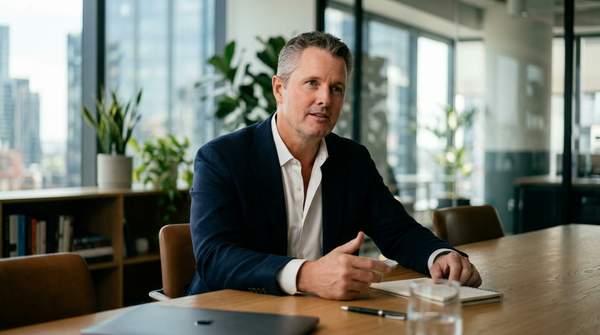
Taking a food distribution business from approximately $10 million to $250 million in revenue means handling far more than bigger orders. New markets introduce unfamiliar relationships, growing operations need stronger infrastructure, and the people who once managed everything personally must learn to lead a much larger organization.
Brad Sugars describes that experience in his account of building and eventually selling portions of a family business-to-business food distribution company. The business expanded across multiple markets, developed consumer brands, and established the infrastructure needed to handle greater operational demands. His account provides a practical view of what happens behind the revenue figures when an established company grows substantially.
The Next Stage Requires Systems That Do Not Yet Seem Necessary
A distribution operation managing $10 million in revenue can function with systems designed around its existing volume of customers, inventory, suppliers, and deliveries. Those arrangements may become inadequate long before the company approaches ten times that size.
Brad emphasizes preparing the business for demands it has not encountered yet. In his account, that meant developing operational processes, reporting, leadership structures, and communication systems before growth made their weaknesses impossible to ignore.
Consider what happens when an order moves through a larger distribution network. Inventory information must remain dependable, responsibilities have to be understood, and the right people need to know when something requires intervention.
Adding volume without improving those connections creates friction throughout the company. Brad’s experience reinforced the need to develop operating capacity ahead of expansion rather than treating every breakdown as a separate emergency.
The Loss Guarantee Changed the Distributor Relationship
One of the most distinctive decisions Brad recounts involved taking more risk onto the company’s own shoulders.
During expansion, the business offered distributors and retailers protection against financial losses on its products. The arrangement was intended to reduce the downside these partners faced when committing resources to an unfamiliar supplier or product range.
That changed the commercial conversation. A distributor evaluating a new relationship could consider the opportunity without carrying the same level of product-related financial exposure.
The strategy also created responsibilities for Brad’s business. A guarantee is a meaningful commercial commitment, so its value depends on the supplier’s ability to support the agreement and manage the financial risks involved.
Brad identifies the arrangement as particularly useful in unfamiliar international markets, where established relationships could be difficult to obtain. Instead of relying on promotional promises alone, the company used its commercial terms to make cooperation more attractive.
West Africa Brought Opportunity With Operational Complexity
Brad specifically discusses expansion into West African markets. The opportunity came partly from conditions that other companies regarded as difficult.
Entering a market with unfamiliar relationships, logistics, and operating practices requires more than recognizing potential demand. A distributor needs dependable partners, knowledge of local business conditions, and the ability to deliver on commitments.
Brad’s account shows why geographic difficulty can influence competitive positioning. Companies unwilling to manage the additional work may leave opportunities for businesses prepared to invest in local knowledge and relationships.
That does not make difficult markets inherently more profitable. The operating risks remain real, and expansion still has to make financial sense.
For Brad’s distribution business, the approach involved developing the relationships and operational capability needed to participate in markets where straightforward entry was less available.
Employee Decisions Helped Preserve the Business Culture
As the organization grew, Brad also had to consider what expansion meant for employees. A family business can develop strong relationships through years of shared experience, but those connections become harder to maintain when the company operates across more markets and teams.
He describes making an effort to retain people through difficult periods by finding alternative responsibilities instead of immediately terminating their employment. The aim was to preserve relationships and the experience already inside the company.
Such decisions involve costs and trade-offs. Keeping employees during a difficult operating period requires enough financial and organizational flexibility to make continued employment viable.
Brad’s account nevertheless gives a concrete meaning to the company culture he wanted to maintain. Employees were treated as people whose knowledge and commitment deserved consideration when circumstances changed.
The experience also informed how the company developed leadership. Protecting valuable relationships and preparing people for greater responsibility became connected parts of sustaining the organization.
Internal Leaders Carried Knowledge Across Growth Stages
A larger distribution company needs people who can make decisions without referring every issue to the original leadership team. That requirement becomes more demanding as products, locations, and customer relationships multiply.
Brad describes developing talent internally rather than relying exclusively on recruiting senior executives from outside. Employees who had grown with the company understood its customers, operating practices, expectations, and relationships.
That knowledge created a useful foundation for greater responsibility. Someone familiar with the operation could carry established standards into a larger role while learning new management skills.
Internal development alone cannot supply every capability a growing company needs. Specialist hires can still bring experience the organization lacks.
Brad’s account emphasizes the advantage of preparing existing people for leadership before expansion creates urgent gaps. The company gains more options when its employees are ready to manage responsibilities that once depended on a smaller group of decision-makers.
Credibility Began Changing the Cost of Expansion
The first entry into a new market often demands extensive introductions, explanations, and reassurance. Potential partners have limited experience with the supplier, so the business must work harder to establish confidence.
Brad describes how that changed as the distribution operation developed a stronger reputation. Existing relationships made subsequent introductions and commercial discussions easier.
This is a different form of business value from inventory or equipment. A reputation for meeting commitments can influence how willing other organizations are to cooperate.
The distributor loss guarantee helped establish that confidence, while continued operational performance gave partners reasons to maintain relationships. Together, these elements supported further market development.
Brad’s experience connects reputation with actual business behavior. Commercial credibility becomes more useful when partners have encountered dependable decisions and execution over time.
Selling Portions of the Business Required Another Kind of Judgment
The account does not end with expansion alone. Brad explains that portions of the business were eventually sold as part of decisions about its future.
Recognizing when another owner or operator may be better equipped to carry a company into its next stage can be difficult. The people who helped build the business often retain strong emotional ties to how it operates.
Yet a larger organization may require capabilities, capital, or leadership arrangements different from those that supported its earlier growth.
Brad describes the partial sales in the context of preserving the values developed within the business while allowing it to continue evolving. The decision illustrates how ownership can change as an enterprise matures.
It also broadens the significance of the reported $250 million revenue figure. The important questions extended into what could sustain the business and who was best positioned to lead particular parts of it.
The Distribution Experience Still Informs Brad’s Business Teaching
Brad is widely associated with ActionCOACH and business education, but this account adds an operating context to his commercial philosophy.
The experience involved accepting risk to establish distributor relationships, entering difficult markets, developing internal leaders, building infrastructure ahead of demand, and making decisions about selling parts of an established enterprise.
Those are materially different problems from delivering a business seminar. They require decisions involving people, capital, partners, and day-to-day operational performance.
They also help explain why Brad’s current teaching places Systems and Team before Scale. His reported distribution experience involved building capabilities that could carry substantially more business activity without relying entirely on the original leadership group.
The reported growth figure provides the scale of the undertaking. The decisions behind it show what Brad says the experience required.
Frequently Asked Questions
What type of family business did Brad Sugars help grow?
Brad Sugars describes working on a business-to-business food distribution operation that expanded into multiple markets and developed consumer brands. His account focuses on its systems, distribution relationships, leadership development, and eventual partial sales.
How much did the business grow according to Brad Sugars?
Brad Sugars reports that the family distribution business increased from roughly $10 million to approximately $250 million in revenue. Those figures come from his own account of the business rather than an independently published financial audit.
Why did Brad Sugars offer distributors protection against losses?
Brad Sugars says the company used a loss guarantee to reduce financial risk for distributors and retailers considering its products. He identifies the arrangement as particularly helpful when establishing relationships in unfamiliar international markets.
What did Brad Sugars learn about leadership during the expansion?
Brad Sugars emphasizes developing internal talent, maintaining employee relationships, and preparing management systems before growth makes them urgent. His experience reinforced the importance of distributing responsibility across capable leaders as an organization becomes larger.
Read the Decisions Behind the Growth
A move from roughly $10 million to $250 million in reported revenue creates an impressive headline. Brad’s account becomes more interesting through the commercial guarantees, geographic decisions, employee relationships, and leadership changes that accompanied the expansion.
Those experiences give his business teaching a foundation in operating decisions with substantial consequences. Read Brad Sugars’ family business account to examine the lessons he draws from building, expanding, and partially selling the distribution company.