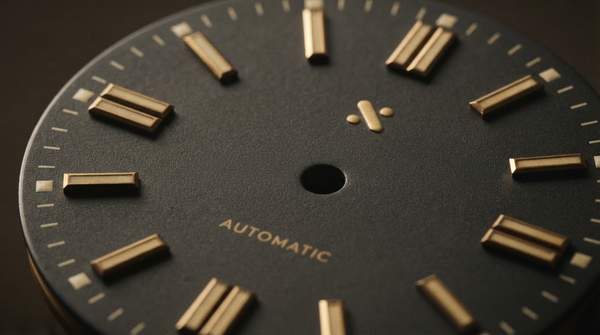
Enamel dials are among the most prized—and most easily misread—decorations in modern watchmaking. The three principal techniques, Grand Feu, Champlevé, and Cloisonné, differ fundamentally in how enamel is applied to metal, and those differences show up on the finished dial as distinct visual signatures. A smooth, deep, uniformly colored surface points to Grand Feu; colored sections carved into the metal itself indicate Champlevé; and designs outlined in fine raised wires mark Cloisonné. Each route to the finished dial carries its own labor demands and failure risks, which is why true vitreous enamel remains a hallmark of high-end watchmaking rather than a mass-market finish.
The Enduring Art of Enamel Watch Dials
Enamel was once a commonly practiced art in watchmaking, before industrial methods of mass production and the pursuit of maximum profit pushed it aside, as Sheng Lee explains at Revolution Watch. Today it is typically reserved for watches that carry a hefty price tag, and its rarity has rendered it somewhat enigmatic even to enthusiasts. The material itself is the key to understanding why. Despite its primary composition being silica, enamel stands apart as a specialized type of glass, requiring specific techniques and a fusing process to adhere it to a metal baseplate. Dials are remarkably small compared to enameled cases or vases, yet they capture the traditional complexity and beauty of the art—a combination of visual richness and material permanence that few other dial finishes can match.
Grand Feu: The Fiery Path to Perfection
Grand Feu, which translates roughly to "Great Fire," is the technique most often meant when watch writers discuss high-end enamel dials. As Nina Scally describes at Teddy Baldassarre, the process begins with raw silica, which is mixed with various metal oxides to create color—iron for gray, copper for blue—and ground down with a mortar and pestle until it forms a fine, dust-like powder. The dial maker takes a base plate, usually made of copper, silver, or gold, and carefully dusts this glass powder over the surface.
The defining stage is firing. Girard-Perregaux describes enamel dials being placed in a kiln heated to 800 degrees Celsius—hence the term "Grand Feu"—with the enameller continuously checking the dial's appearance through a small opening to monitor the vitrification process. The dial is painted with a layer of enamel, fired, and removed; once cooled, the process is repeated, typically five to ten times, so that the surface is homogenous and the colors deep and intense. The inherent danger of multiple firings is that each pass heightens the risk of bubbles, cracks, or other imperfections, culminating in the dial being discarded. The reward is the technique's signature: a perfectly smooth, deep, uniformly colored surface.