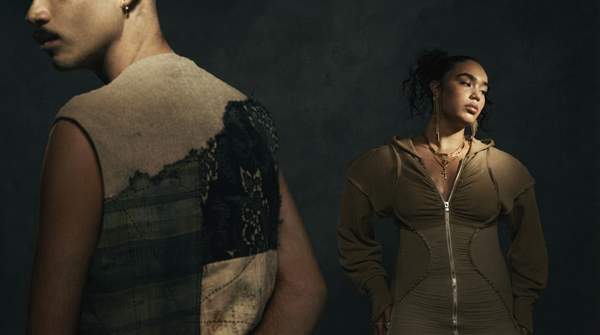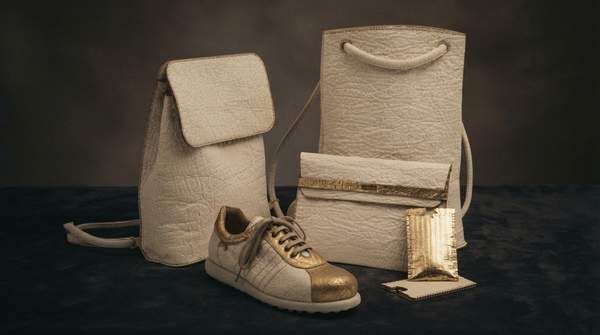
Luxury fashion's next material story is being written with citrus pulp, seaweed, mycelium, and common field crops. Four textiles in particular—Orange Fiber, SeaCell, Reishi, and BioFluff's Savian—have crossed the threshold from laboratory curiosity to documented use by named luxury houses, including Salvatore Ferragamo, Loewe, Hermès, and Stella McCartney. I believe this short list is the most efficient entry point for any designer or sustainability manager beginning serious material research, because each fiber represents a distinct strategy: rescuing food-industry waste, harvesting marine biomass, cultivating fungal tissue, and replacing animal fur with plants.
Orange Fiber: From Citrus Waste to Couture
The Italian startup Orange Fiber was founded to solve a specific waste problem: the by-products of citrus juice production, which would otherwise be discarded. The company transforms this citrus pulp into lightweight, luxurious fabric, and its trajectory took a significant step when the Austrian wood-based fiber producer Lenzing partnered with it on a lyocell fiber—known as TENCEL™—enhanced with orange pulp to extend the boundaries of plant-based material innovation.
The resulting textile is described as lustrous and breathable, with UV protection, natural sheen, and moisture control. Its luxury credentials are concrete: Salvatore Ferragamo and Loewe have both used the fabric, making Orange Fiber one of the few next-generation materials with multiple documented luxury adopters. Enrica Arena, CEO of Orange Fiber, framed the ambition plainly: "This pioneering production model can help revolutionise the fashion industry and empower brands who are looking for more eco-responsible textile value chains."
For a designer, the appeal is twofold. The material carries a compelling origin story—waste from the citrus industry reborn as couture—and it slots into an existing, familiar production system through the lyocell process rather than requiring an entirely new supply chain.
SeaCell: Ocean's Bounty for Fashion
SeaCell takes a different route to sustainability, combining marine and terrestrial plant sources. Developed by the German company smartfiber AG, the fiber is made from seaweed and wood using the lyocell process in a closed-loop system that, as reported by Luxury Tribune, releases no chemicals as waste. The seaweed is harvested in the Icelandic fjords, then washed, dried, ground, and incorporated into the cellulose fiber.
According to smartfiber's own material, the fiber is 100% biodegradable and compostable, has been tested and approved by several independent institutes, and can be developed across the entire value chain—from fiber and yarn through knitted, woven, and non-woven fabrics. The company positions itself as a partner throughout that process, which matters for luxury brands that need traceability and consistency at scale.
Its documented luxury user is Another Tomorrow, a New York-based B-corp-certified luxury brand that champions regenerative fibers. Another Tomorrow worked with smartfiber's R&D partner PYRATEX® to create a capsule collection of luxury essentials made with SeaCell, designed to last a lifetime—a pairing that signals the material's fit with brands whose sustainability claims face scrutiny.