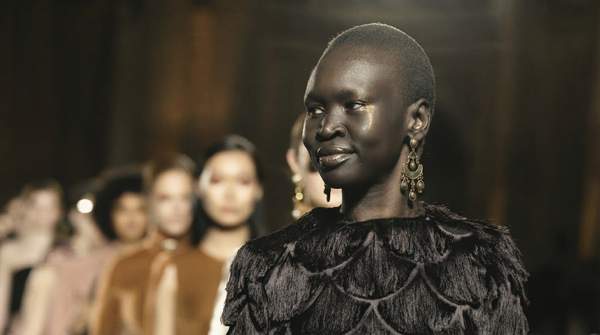
Runway casting is not a choice between a designer's aesthetic and inclusivity; done well, I believe it is a single deliberate process that treats both as inputs to the same decision. Contemporary casting directors describe their work as a collaboration that translates a designer's specific vision into a lineup, while carrying an explicit responsibility to present models who reflect society. The perspectives gathered here—from working casting directors interviewed by System Magazine, Vogue and Coveteur—point to three pillars: the designer's vision, the sourcing strategy, and diversity objectives, plus one persistent pitfall: treating inclusion as an aesthetic rather than a commitment.
The Evolving Role of Casting Directors in Fashion
Casting directors select and organize the talent for shows, campaigns and shoots—scouting, running auditions, and collaborating with producers, directors and designers to understand a project's vision, as industry guides describe the role. But the position has acquired a second mandate. Because casting directors are the people who present the models who walk designers' shows and star in campaigns, Vogue reported in 2020, they play a crucial role in creating an industry that accurately mirrors society. Longtime diversity advocate Bethann Hardison put the pressure more bluntly in a 2014 interview with Vogue's Nicole Phelps: casting directors "are the perpetrators" of homogeneous runways and "really don't understand the responsibility they have." The role, in other words, is now both curatorial and ethical—and increasingly commercial, as brands see representation as a way to build trust with consumers.
Pillar 1: Defining the Designer's Aesthetic Vision
Every casting decision starts with interpretation. In a System Magazine conversation about menswear shows, casting director Troy Fearn described holding live castings with the client and stylist, calling in models to try different looks and seeing which person best embodies the collection. But the brief differs sharply by designer. For the label Ahluwalia, Fearn's team looked for "striking and beautiful models, people who can storm the runway and elevate the clothing," whereas for Saul Nash, whose work is informed by dance and movement, "it's important for his community to be reflected in his shows." The depth of this understanding develops over time: Fearn's team described casting for designers they knew personally—Jeanne Friot's "very specific aesthetic," or Reese Cooper's return show—as helping each designer's vision rather than imposing an external one. Vision, then, is a relationship, not a one-page brief.
Pillar 2: Choosing a Casting Strategy
Once the vision is clear, the sourcing method follows from it. Traditional agency casting draws on established rosters and submissions; street casting takes scouts to dance schools, clubs, and online spaces, as Fearn's team did for Nash. The strategic choice matters for diversity because different channels surface different people—scouting a dance school reaches a community an agency board may never present. But method alone guarantees nothing. Coveteur's 2026 interviews with four casting directors working across traditional and street casting captured a familiar reality: while many brands still prioritize racial diversity, "thinness and whiteness are once again becoming the default." Street casting can become its own superficial gesture if adopted as a trend rather than with genuine care for the individuals and their careers. The authentic version treats the people scouted as talent with trajectories, not props for a look.
Pillar 3: Integrating Diversity and Inclusion Objectives
The third pillar is the one casting directors say the industry most often hollows out. Inclusion spans race, age, disability, gender identity and body type, and the Vogue casting-director roundtable made clear that the responsibility is shared: the industry "isn't doing enough to uplift the voices of BIPOC, disabled, and LGBTQ+ people," and accurate representation falls on everyone working in fashion, with agencies obliged to provide diverse profiles and designers to adapt clothes to models rather than the reverse.
Gilleon Smith, known for her work on Chromat's New York Fashion Week shows and later an agent at CAA Fashion, told Vogue that "tremendous strides have been made in redefining traditional beauty standards" while still demanding more. Progress is measurable but uneven: Vogue's 2022 report on a Tommy Hilfiger show noted genuine inclusion alongside a notable absence of non-able-bodied models for a brand producing adaptive apparel.
Navigating Pitfalls: The 'Aesthetic vs. Commitment' Challenge
The central critique from inside the profession is that diversity became a language rather than a system. One of the casting directors Coveteur interviewed put it starkly: "Diversity is less and less a priority, and I think for a long time it was more of an aesthetic than a real commitment." The same practitioner observed that runway intention "doesn't always translate into where the real investment goes," and that nothing was ever truly reflected "in who gets paid, in who holds power." The practical risk is reversion: without financial investment and genuine priority, defaults—whiteness and thinness, in these practitioners' assessment—creep back. This is the failure mode a modern casting strategy must be built to withstand.
Decision Framework for Inclusive Casting
Use this matrix to test each casting decision, tracing it from vision through sourcing to inclusivity—and to expose where commitment is only aesthetic.
| Casting pillar | Key consideration | What the evidence shows | Qualification |
|---|---|---|---|
| Designer's vision | Aesthetic interpretation | Live castings with client and stylist; some brands need models who "elevate the clothing," others need a community reflected onstage | Interpretation deepens as the working relationship with the designer builds |
| Casting strategy | Talent sourcing | Agency submissions versus street scouting at dance schools, clubs and online | Street casting is questioned as superficial when done as a trend without care for the individuals |
| Diversity & inclusion goals | Inclusive decision-making | Casting directors advocate for diverse profiles across race, age, disability, gender identity and body type | Responsibility extends to agencies supplying diverse boards and designers adapting clothes to models, not vice versa |
| Commitment test | Superficiality vs. system | Practitioners report inclusion treated as an aesthetic and a way to "feel contemporary" | Without sustained financial investment and payment structures, defaults of whiteness and thinness return |
To read it as a workflow: start in the first row and define what the collection demands; use the second row to pick a channel that will actually surface that demand; hold the result against the third row across every dimension of diversity, not just the trend-convenient ones; and pass the fourth row last, asking whether the choice is funded and repeated. A lineup that satisfies the first three rows but fails the fourth is decoration.
Moving Towards Authentic Inclusivity in Casting
Implement a casting strategy that intentionally integrates the designer's vision with explicit diversity and inclusion objectives, moving beyond superficial trends. The measure that matters is increased representation across multiple dimensions of diversity—race, age, body type—in runway shows, supported by consistent brand messaging and sustained financial investment in diverse talent. Watch the fourth row of the matrix over consecutive seasons: if the names, the pay and the power stay with the same narrow profile while the runway rhetoric changes, the aesthetic has won. This framework reflects the perspectives of the working casting directors cited here, not an exhaustive industry standard, and it is not legal advice—but it gives brands and casting agents a way to justify every name on the call sheet.
Sources
- System Magazine
- 4 Casting Directors Sound Off on Modeling’s Inclusive Future — Vogue
- Who Gets To Be Fashion's Next Top Model? — Coveteur
- Casting Director NYC: How It Works, Step by Step — Photogenics Media
- Bethann Hardison Talks Diversity on the Runways, Igniting the Fashion Industry, and Making People Feel Responsible — Vogue
- Tommy Hilfiger raises the bar for diverse model casting — Vogue