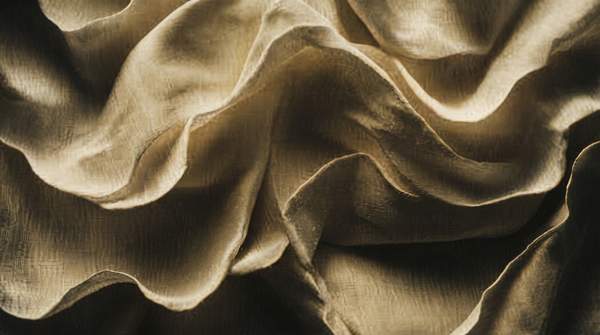
Two fabrics can share the same fiber content and weight yet fall into completely different silhouettes, and the reason is mechanical: how a fabric drapes is a predictable outcome of four interacting construction variables—fiber, yarn, weave structure, and density. As textile supplier Nooteboom Textiles explains, drape describes how a fabric hangs, falls, and forms folds under its own weight, and fabrics with similar weight and fiber composition still behave very differently because their yarns, weave construction, density, and finishing all shape how they fall. I believe that once designers stop treating drape as a mysterious fabric "personality" and start reading it as a causal chain from construction to bending stiffness, material selection becomes a diagnostic exercise rather than guesswork.
The Mechanics of Drape: A Causal Model
Drape is not a single property. Writing for SELVANE, the editorial team there describes it as "the result of a complex interplay between the fabric's constituent fibers, the structure of its yarn, and the architecture of its weave." A fabric with high drapability, such as silk, falls into fluid, graceful folds; a fabric with low drapability, such as heavy canvas, holds its shape more rigidly. The causal chain runs in one direction: fiber and yarn properties set the baseline pliability of the threads, the weave's interlacing pattern determines how freely those threads can move against each other, and density determines how tightly the whole system is locked together. The combined result is the fabric's bending stiffness, which governs whether it collapses into soft folds or holds an edge.
Fashion Index's guide to woven construction makes the practical stakes explicit: how yarns are arranged within a textile determines its mechanical behavior, including drape, stability, wrinkle resistance, durability, and flexibility—and understanding these principles lets designers and sourcing professionals make informed decisions long before production begins. Their advice to professionals evaluating supplier swatches is direct: don't stop at fiber content; examine the weave structure, weight, density, and finishing processes to understand how the fabric will actually perform.
Fiber Properties: The Foundation of Flexibility
The fiber is the raw input of the model, and its inherent stiffness or pliability sets the ceiling on what the rest of the construction can achieve. Softer, more pliable fibers contribute to a more fluid drape, while stiffer fibers resist bending from the start. A fiber guide from YourColors ranks common fibers along exactly this spectrum: rayon, modal, Tencel, and silk are credited with soft, fluid, flowing drape; cotton varies by weight and weave; linen is described as slightly stiff with a more structured drape; and polyester is characterized as stiff with limited drape that maintains shape.
Two cautions apply when reading that ranking. First, fiber type influences tactile qualities beyond drape, including hand, so a fiber's drape ranking cannot be read as a complete quality judgment. Second, fiber is only the starting point—the same cotton can hold a collar crisply or slump into a soft blouse depending on what the yarn, weave, and density do with it. Fiber tells you what the threads are made of; it does not yet tell you how they are held together.