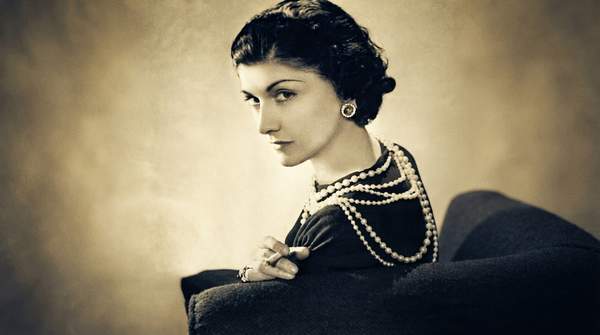
The most consequential designers in modern fashion history did more than change hemlines. They attacked the assumptions underneath the clothes. Coco Chanel and Rei Kawakubo, working half a century apart, represent two distinct modes of revolution: one rooted in liberating the body, the other in dismantling the very idea of beauty. Understanding how each worked—and why their approaches diverged so completely—reveals what it actually takes to permanently alter fashion's foundations.
Introduction: Redefining Fashion's Foundations
A designer earns a place in the canon by changing something that outlasts them. That is the test 24Fashion TV applies when ranking influential designers: did they change the cut, the system or the conversation in a way that persisted after their moment passed? By that measure, Chanel and Kawakubo stand among the few clear cases.
Chanel's revolution was material and social. Kawakubo's was conceptual. A design-education profile from UDIT, authored by Ridhima Sharma, traces how Chanel's jersey became "a symbol of liberation," while the same source describes Kawakubo's anti-fashion aesthetic as one that "dismantles conventions." Neither designer simply offered new looks; each rejected an entire framework for what clothing could be. The paths they chose, and the norms they overturned, make a study in how fashion actually changes.
Coco Chanel: The Liberation of Comfortable Luxury
Chanel's most radical act was a fabric choice. Her use of jersey in women's wear, as the UDIT profile recounts, positioned the material as a rebellion against the corset—an emblem of liberation rather than mere novelty. In an era when affluent women dressed in stiff, corseted styles, jersey offered movement, softness and practicality. What looked like a technical decision was in fact an argument about what a woman's day should feel like.
Her stated philosophy anchored that argument. "Luxury must be comfortable, otherwise it is not luxury," she insisted, a formulation that inverted the era's equation of expense with rigidity. She went further: "Nothing is more beautiful than freedom of the body." Under that principle, the corseted silhouette was not just outdated but aesthetically wrong.
The Chanel suit extended the same logic into the postwar decades. The collarless tweed jacket and skirt she revived in 1954 became, in the profile's account, "a symbol of post-war femininity and empowerment," reflecting the modernity of its era. Her legacy, the same source notes, continues to shape women's fashion today—less a look than a posture of identity and independence.