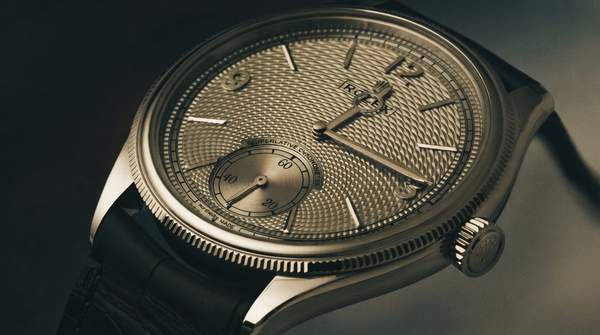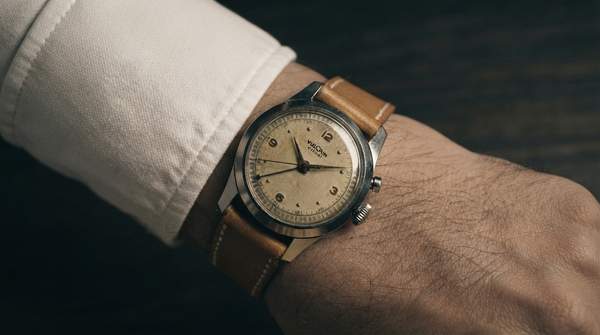
A vintage luxury watch earns collectible status through five interacting criteria — genuine rarity, original condition, documented provenance, specific configuration, and sustained market demand — and each one can be assessed systematically before money changes hands. Age alone confers nothing. As the specialist magazine Mostra frames it, a watch's value "is not merely a figure. It is a conclusion," reached through examination, expertise, and the ability to distinguish appearance from reality. This guide turns that principle into a repeatable evaluation process, showing where true, market-moving rarity begins, why originality matters so intensely, and how the choice of sales channel quietly reshapes both price and security.
The Foundation of Collectibility: Five Key Criteria
Every serious evaluation rests on the same five questions. Is the watch truly rare, or simply seldom seen? Is it original, with dial, hands, and bezel coherent with its period? Can its history be documented? Which reference and configuration does it represent? And is there real, durable demand for it? These factors do not operate in isolation. A watch that is weak on one dimension — modest production numbers without collector tension, say — can still disappoint, while a high-production piece embodying a sought-after aesthetic or period can remain highly liquid. The auction house FORTUNA notes that makers identify models by reference number and individual watches by serial number, and together these tell the market "exactly what a watch is," which is why catalog descriptions lead with them.
Rarity and Production: Beyond Simple Scarcity
Rarity is, in Mostra's words, one of the most commonly used words in watch listings and also one of the most dangerous. The critical distinction is between rarity and mere scarcity. A watch may rarely appear on the market without being truly rare; it may be rare but barely desired; it may have been produced in small numbers without creating collector tension. Conversely, a watch produced in significant quantity can stay highly liquid if it embodies a sought-after aesthetic, function, or period. The diagnostic question is therefore never "how few were made?" but "how few exist and how many serious collectors actively compete for them?" Low supply without competition produces scarcity, not value. Only scarcity joined to demand produces the price tension that defines a genuine collectible.