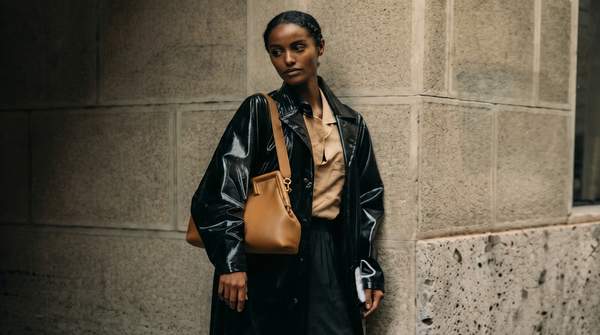
An "It Bag" is a high-priced designer handbag that becomes a best-selling cultural phenomenon—the object of a season's collective desire, or sometimes of an entire decade. The term itself was coined in the 1990s, when explosive growth in the handbag market had designers competing to produce a single, easily recognisable design that, if cleverly marketed, endorsed by the fashion press, or seen being carried by a celebrity, would become that season's must-have item. Yet the bags most people associate with the phenomenon—Chanel's 2.55, Hermès' Kelly and Birkin—were designed decades earlier. What changed in the 1990s was the machinery of desire: luxury conglomerates, celebrity imagery and editorial power combined to turn accessories into the industry's great profit engine.
The Enduring Allure of the 'It Bag'
The modern reader meets a curious paradox: the oldest icons predate the label. Chanel's 2.55 dates to February 1955, and Hermès' Kelly owes its covetability to Grace Kelly being seen carrying it, yet the phrase "It Bag" only entered fashion vocabulary with the 1990s and 2000s designer bag craze. As Harper's Bazaar fashion editor Amy de Klerk traces it, the shift came when fashion brands were bought up into huge luxury conglomerates and newly empowered creative directors were tasked with making much more money. For many houses, handbags became the answer: unlike ready-to-wear, accessories are the great unifier—no sizing limitations—and the markup on designer handbags is substantial.
Even before the term existed, the concept had a precursor. Giuliana Camerino, who founded the Venetian house Roberta di Camerino in 1945, is credited as one of the first designers to create the easily identifiable "status bag," with instantly recognisable artisan-made hardware and fabrics once reserved for clothing. The instinct—to make a bag legible as a marker of standing—long predates the marketing machinery that industrialised it.
The Formula for an Icon: Design, Celebrity, and Scarcity
Ask what actually elevates a bag, and even professionals hedge. "Defining an It bag is a little like finding love; it's something that you just feel in your gut," Libby Page, formerly Net-a-Porter's market editor, told Harper's Bazaar. "There is no one-size-fits-all." But across eras, a consistent combination of factors emerges—what Page argues must include being very popular and relevant to a seasonal style while also transcending trends.
The first factor is design recognition. An it-bag's silhouette is instantly identifiable; as one luxury retail analysis puts it, you do not simply want it because you need a handbag—you want it because you recognise it, associate it with a certain lifestyle, and understand what it represents. Design creates recognition, but culture gives that recognition meaning: a celebrity appearance can introduce a bag to millions, yet a single image rarely creates an icon. Permanence comes through recurrence across different settings, generations and forms of media.
Scarcity completes the equation. Certain combinations of Birkin and Kelly bags in rare leathers and sought-after colours can be exceptionally difficult to find, and the search itself becomes part of the experience. When a bag is hard to obtain directly from the brand, the pre-owned luxury market becomes even more attractive—a dynamic that now feeds back into a bag's perceived status. Sociological research on luxury branding, as one retailer's cultural history notes, shows brands strategically employ branding techniques to create exactly these status markers, communicating social hierarchy, financial achievement and personal taste.
The Evolution of 'It Bags': A Timeline of Icons
Sequencing the seminal bags chronologically reveals a clear pattern: before the 1990s, icons were built slowly by singular celebrity moments and lasting design; after, they were manufactured deliberately by pop culture and marketing. The table below correlates each bag with the cultural driver that propelled it.
| Bag / Brand | Era of Influence | Key Cultural Driver | Defining Characteristics |
|---|---|---|---|
| Roberta di Camerino | 1945 onward | Founder Giuliana Camerino credited as an early creator of the identifiable "status bag" | Artisan-made hardware; fabrics formerly reserved for clothing |
| Chanel 2.55 | 1955 onward | Enduring design legacy; predates the "It Bag" label itself | Quilted design and chain strap; introduced February 1955 |
| Hermès Kelly | Mid-20th century onward | Grace Kelly seen carrying it, giving the bag widespread covetability | Structured, top-handle bag with rounded corners and wider base support |
| Hermès Birkin | 1984; peak 1990s–early 2000s | Created for actress and singer Jane Birkin | Modification of the earlier Haut à Courroies design (originally c. 1900) |
| Fendi Baguette | Late 1990s–2000s | Pop culture, notably Sex and the City's Carrie Bradshaw declaring, "It's not a bag, it's a Baguette!" | Slim shoulder silhouette; a defining cult accessory of the era |
| Dior Saddle, Louis Vuitton Multicolore | Early 2000s | Association with the era's fashion mood; celebrity-driven 2000s trends | Distinctive, era-defining shapes and logos |
The chronology shows the mechanism shifting over time. The Kelly and Birkin rose through a single, named celebrity and decades of accumulated scarcity; the Baguette and Saddle were propelled by television and the concentrated celebrity culture of the early 2000s. One luxury retail analysis notes these bags became icons because they perfectly captured the mood of their period, closely associated with the fashion of the era.
The Digital Transformation: 'It Bags' in the Social Media Era
The 21st century has broken the old model. Where It Bag status once took magazine seasons and paparazzi cycles to build, platforms like TikTok and Instagram can now generate viral demand for a specific bag within days—a compression documented in Business of Fashion's coverage of shifting luxury consumer behaviour, as one handbag history recounts. The consequence is fragmentation: cultural attention now spreads across more simultaneous trending bags rather than concentrating on a single dominant style for years at a time.
Insiders confirm the change. "In the 2000s, there was one bag a year that everyone had to have. Today, it's more of an individual choice," Patricia Pao, a Chanel client and skincare brand founder, told Harper's Bazaar. The same reporting quotes Page expecting social media to fuel resurgences of 2000s and 2010s trends, with "old friends like the Celine Luggage Tote and Louis Vuitton's Speedy" likely to have another moment—evidence that some bags soar, drop off, and re-emerge decades later.
The secondhand market has become integral to this loop. When scarcity makes direct purchase difficult, pre-owned luxury becomes more attractive, and resale demand itself functions as a credential of status. Meanwhile, 2000s styles popularised by celebrities such as Paris Hilton and Britney Spears—the baguette, bowling and tote shapes—are resurging among Gen Z shoppers, who, as one handbag history observes, find the original designs still desirable.
Beyond the Hype: The Lasting Legacy of the 'It Bag'
What endures beneath the churn is the underlying psychology: the desire for recognition, association and scarcity remains constant even as the media cycles delivering it compress from seasons to days. The It Bag phenomenon, as one history concludes, says as much about media cycles and cultural timing as about handbag design itself. Structured, versatile silhouettes have stayed relevant across multiple eras of the phenomenon, regardless of which specific style trended in any given year—suggesting durability is a design property, not merely a marketing outcome.
This article has focused on the Western fashion phenomenon and a curated selection of seminal examples rather than an exhaustive catalogue, and it offers no valuations or investment guidance. Within that scope, one point stands: an It Bag is never just a well-selling handbag. It is a convergence of an instantly recognisable silhouette, authentic celebrity association, engineered scarcity and the media machinery of its moment—recognisable in a Kelly as much as in a viral TikTok trend.
Navigating the 'It Bag' Landscape Today
To understand the true cultural impact and potential longevity of a contemporary 'It Bag,' consumers should evaluate its unique design, the authenticity of its celebrity association, and its perceived scarcity beyond fleeting social media trends.
The measurable test is the secondary market: the sustained demand for a bag in the secondary luxury market, rather than just initial social media virality, indicates its potential for lasting 'It Bag' status. A bag that vanishes when the trend cycle moves on was a moment; one that resale shoppers continue to seek—like the Birkin, the Kelly or, on present evidence, the resurgent 2000s styles—has passed into the smaller category of genuine icons.
Sources
- It bag - Wikipedia — EN
- What Makes an It Bag ”It”? — Harper's BAZAAR
- History of Luxury Handbags: Timeless Symbols of Status — San Rocco Italia
- Do you ever wondered why an it-bag is an it-bag ? — bamluxurystore
- Beyond the It-Bag: How Handbags Become Cultural Icons — newwavemagazine
- A Handbag History: The Evolution of Purses That Define the Eras — Urban Expressions
- What Makes an It Bag an It Bag? — Harper's BAZAAR
- History of the It Bag — Foley & Corinna